AI Script Writing for Shorts: How to Hook Viewers in 3 Seconds
Last updated: September 22, 2026 · Mandeep Builds
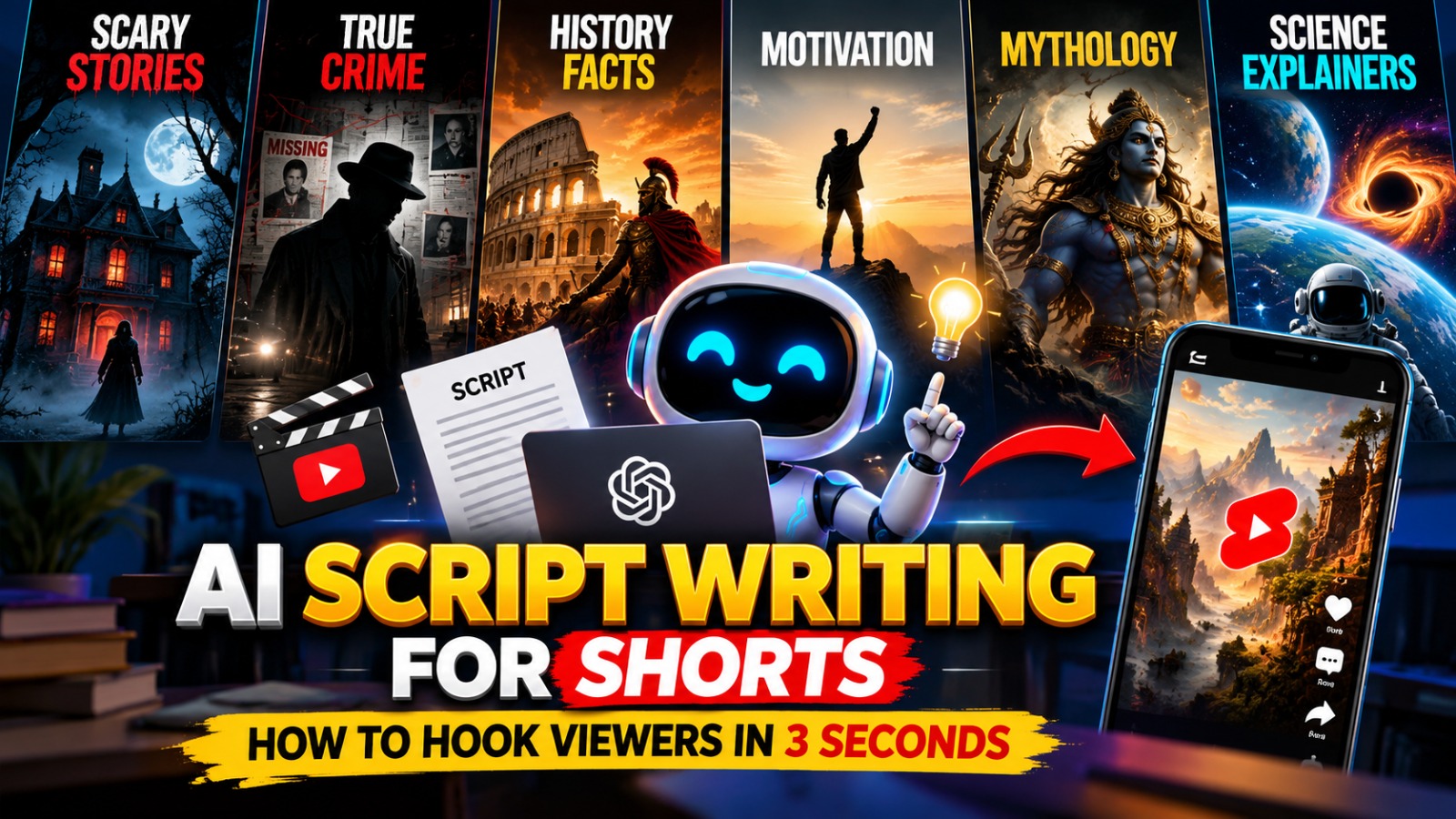
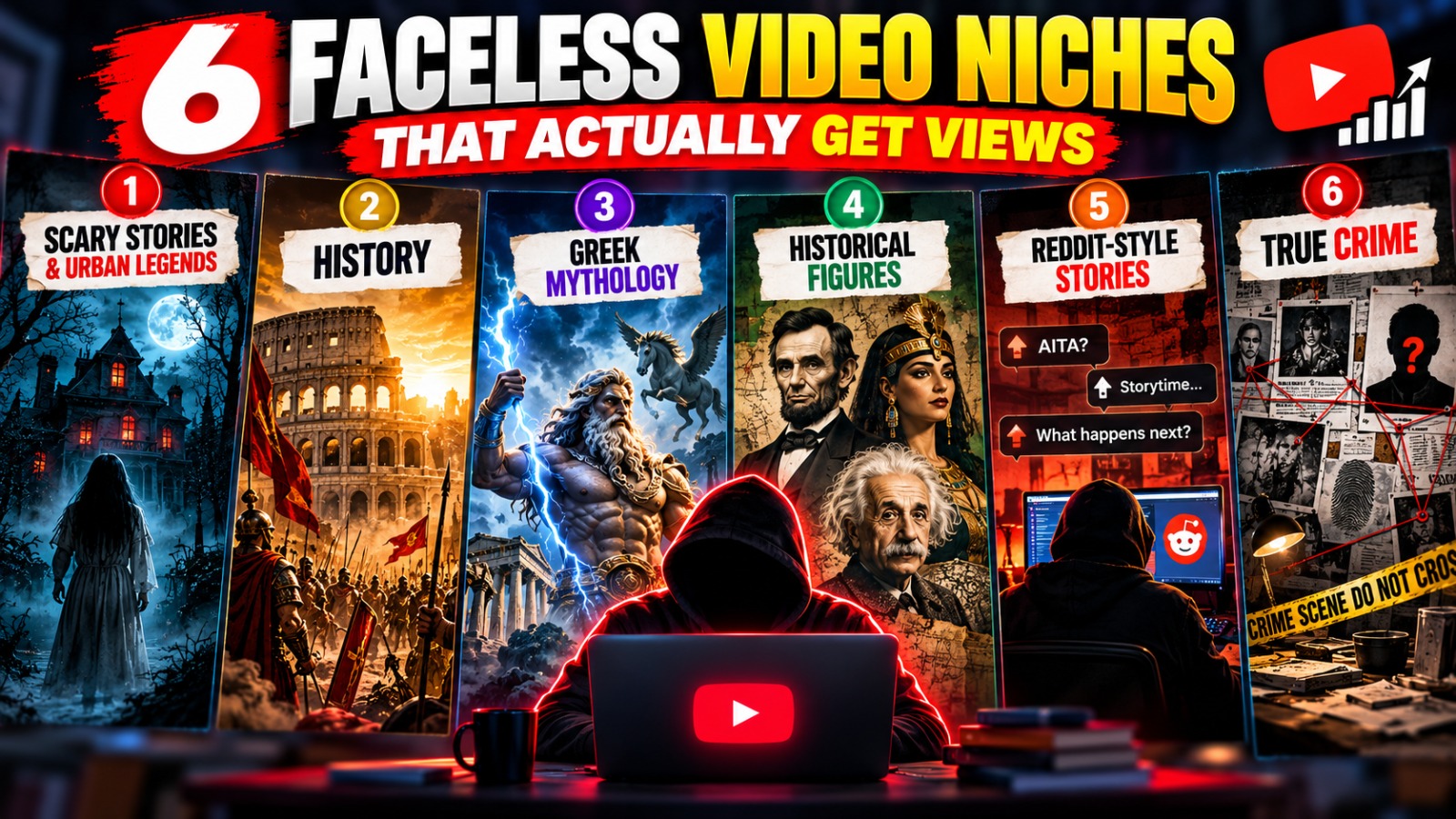
The best faceless niches for YouTube Shorts in 2026 are scary stories, true crime, history facts, motivation, mythology, and science explainers. They work because the story carries the video, not a face. Pick the one you can script 30 times without getting bored, then let AI handle art, narration, and posting.
Which faceless niches get views on Shorts?
Niches that win share three traits: a built-in hook, endless source material, and a visual style AI can generate consistently. Here is how the six compare at a glance.
| Niche | Effort | Competition | Best for |
|---|---|---|---|
| Scary stories | Low | High | Fast watch-time, loyal repeat viewers |
| True crime | Medium | High | Story-driven, comment-heavy videos |
| History facts | Medium | Medium | Evergreen content that keeps getting found |
| Motivation | Low | Very high | Easy volume, hard to stand out |
| Mythology | Medium | Low | Distinct art styles, less saturation |
| Science explainers | High | Medium | Educational authority, better sponsor fit |
Low competition is not automatically good. A niche nobody covers may have no audience. Mythology is the rare case where interest is real and the field is still open.
Why do scary stories work so well?
Scary stories work because suspense forces people to watch to the end. A 40-second story with a creepy opening line and a twist at the last second gives you the retention signal YouTube rewards. Every story is a self-contained video, so you never run out of ideas.
AI image styles like dark ink, grainy film, or painted horror fit the genre without extra editing. The catch is saturation: dozens of channels post the same Reddit-style stories. Stand out with a consistent narrator voice and a recognizable art style rather than a better story alone.
Is true crime still worth it as a faceless niche?
Yes, but only if you treat it as storytelling, not news. Viewers come for the case, the timeline, and the unanswered question. Short, well-paced cases perform best, especially when the hook states the strangest detail in the first sentence.
Two cautions. Stick to documented facts and public records, because unverified claims can get a channel demonetized or worse. Also expect more review of sensitive topics, so avoid graphic descriptions. Calm, serious narration and muted visuals suit the niche better than dramatic effects.
What makes history facts a safe long-term bet?
History is evergreen. A video about a strange historical event can still pick up views a year later, because people keep searching for it. That gives you a library that compounds instead of a feed that expires in 48 hours.
Pick a narrow angle, such as ancient engineering mistakes, forgotten inventions, or odd laws, instead of "history" in general. A narrow angle makes your channel easier for viewers to understand and for the algorithm to recommend. Check dates and names before publishing, because history audiences correct errors in the comments quickly.
Should you start a motivation channel?
Motivation is the easiest niche to produce and the hardest to stand out in. A quote, a calm voice, and a cinematic background are enough to publish daily, which is exactly why thousands of channels do it.
If you pick it, avoid generic quotes. Build a specific angle: stoic philosophy, student discipline, or founder lessons. Choose one voice and one visual style and never change them. Motivation also converts less directly to products or sponsors than education niches, so be realistic about monetization.
Why is mythology a hidden opportunity?
Mythology has built-in drama, striking visuals, and far fewer faceless channels than horror or motivation. Greek, Norse, Egyptian, and Japanese stories offer hundreds of ready-made plots, and AI art handles epic, painterly scenes well.
The audience skews curious and loyal. Viewers who like one myth tend to binge the rest. Start with a series format such as "Gods you never heard of" so each video makes the next one easy to click.
How do science explainers compare?
Science explainers take the most work because accuracy matters and visuals need more planning. The payoff is authority. Educational content tends to attract more trusted viewers and better sponsor fit than entertainment niches.
Keep each Short to one idea, one surprising fact, and one clear explanation. Use simple diagram-style visuals instead of realistic scenes the AI may get wrong. If you are unsure about a claim, cut it.
How do you pick the right niche?
Use this quick filter before committing:
- Interest: can you write 30 scripts in this niche without burning out?
- Source material: do you have an endless supply of ideas, not just five?
- Visual fit: can AI generate a consistent look for it?
- Angle: can you describe your channel in one sentence that no competitor shares?
- Money path: does it fit ads, sponsors, or your own product?
Test two niches for two weeks each with 10 Shorts, then double down on the one with better average view duration. Retention tells you more than raw views.
FAQ
What is the best faceless niche for beginners?
Scary stories and history facts are the easiest to start. Both give you endless ideas and visuals that AI handles well, and neither needs deep expertise.
Can faceless channels make money on YouTube Shorts?
Yes. Faceless channels can monetize through the YouTube Partner Program, sponsorships, and affiliate or product links, as long as the content is original and follows YouTube's policies.
How many faceless videos should I post per week?
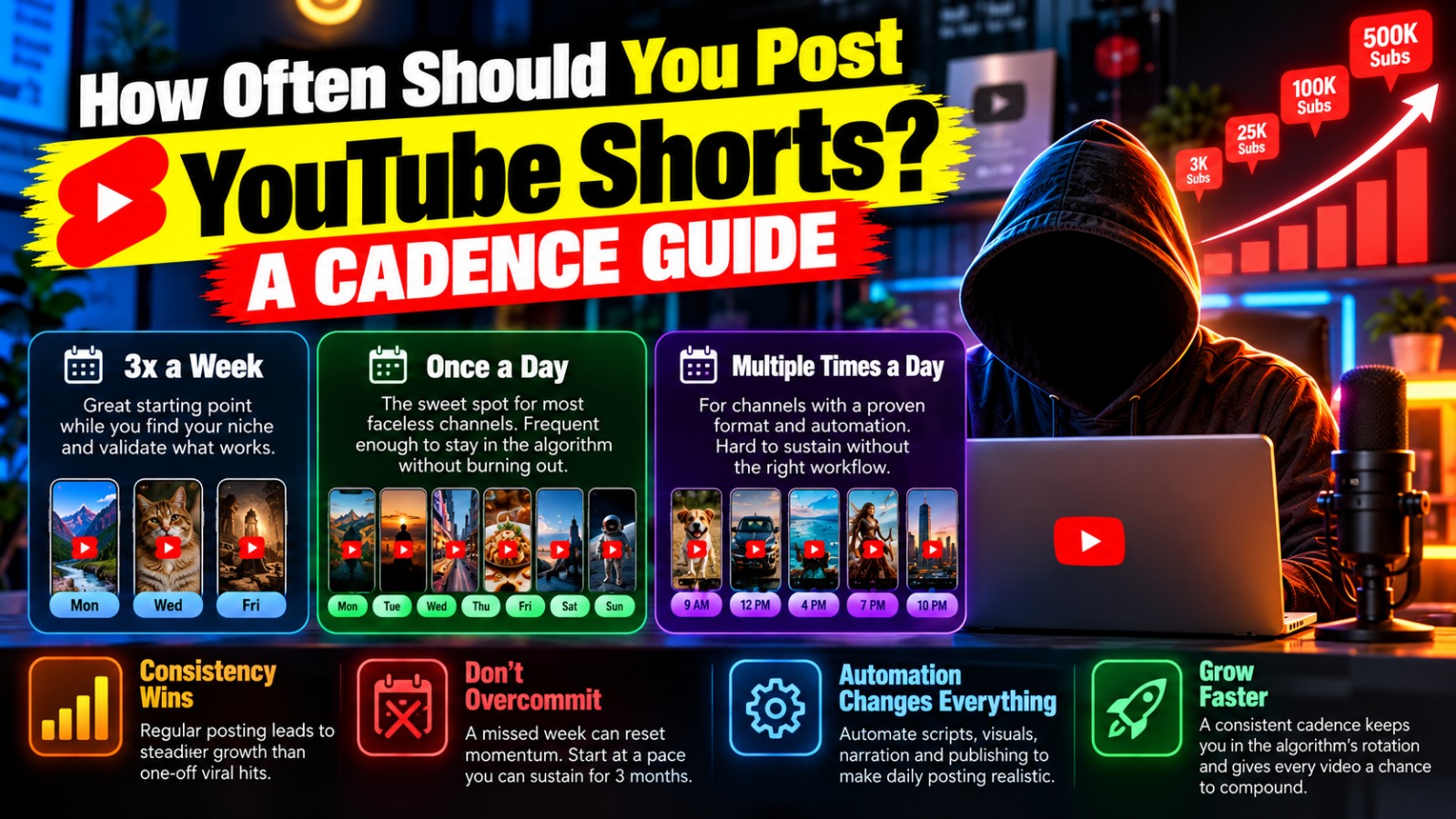
Pick a schedule you can sustain, usually 3 to 7 Shorts per week. Consistency matters more than volume, and posting daily for two weeks then quitting hurts more than posting 3 times a week for months.
Is AI-generated content allowed on YouTube?
Yes, but YouTube asks creators to disclose realistic altered or synthetic content in some cases, and it demotes mass-produced, repetitive videos. Add your own script angle and voice so each video offers something new.
Start with one niche this week
Choose one niche from the table, write five scripts, and publish them with a consistent voice and art style. Faceless Shorts AI turns a topic into a finished video with script, art, narration, and auto-posting, so you can test a niche in days instead of weeks.